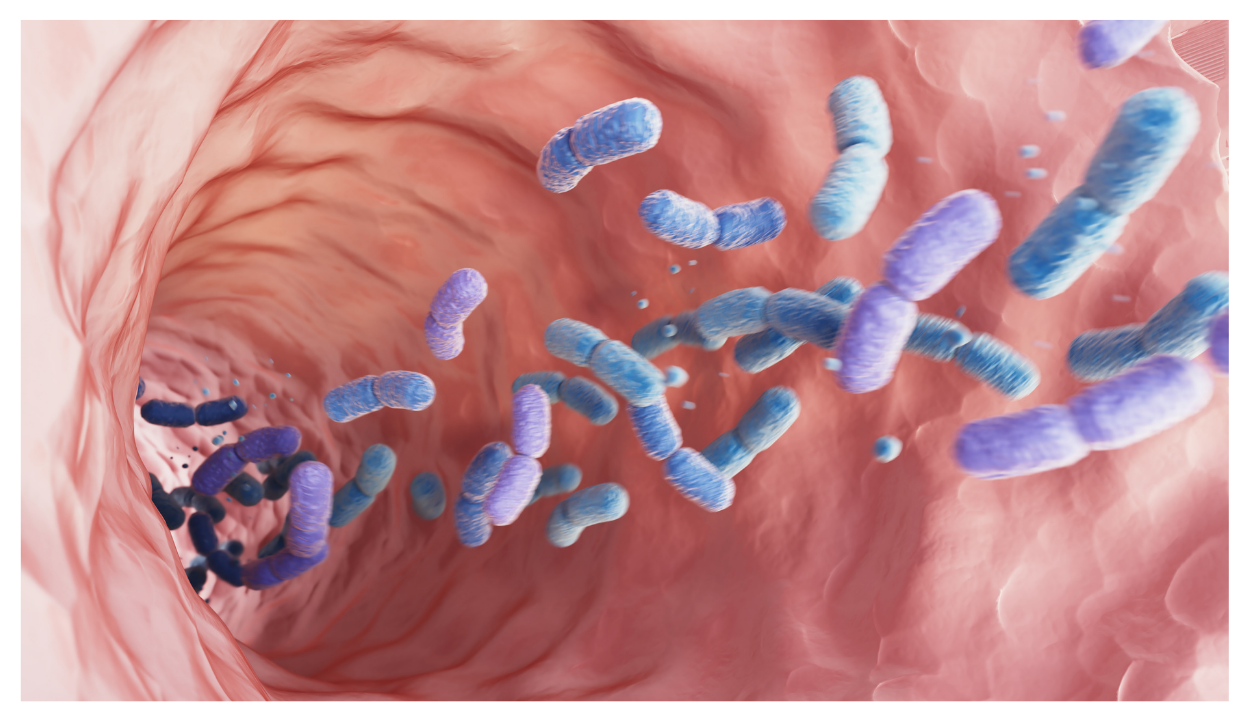
If you’ve spent any time in gut health or metabolic health content lately, you’ve probably seen one name showing up over and over: Akkermansia muciniphila. It’s not a new discovery. It’s a bacterium that’s lived in the human gut all along. What’s new is how much research is now connecting it to things people actually care about: gut lining health, blood sugar regulation, mood, and the same GLP-1 pathway that’s become a household term. Here’s what the actual science says, and what you can do with it.
What Is Akkermansia Muciniphila?
Akkermansia muciniphila makes up roughly 3% of the total gut bacteria in healthy adults, a small but meaningful share. Its name is a nod to two things: “Akkermansia” honors microbial ecologist Anton Akkermans, and “muciniphila” literally means “mucin-loving,” a fitting description for a bacterium that lives in and feeds on the mucus layer lining your intestines. Lower levels of Akkermansia have been observed in people with obesity, type 2 diabetes, and inflammatory gut conditions, which is part of why it’s drawn so much research attention (Mo et al., 2024).
Where It Actually Lives
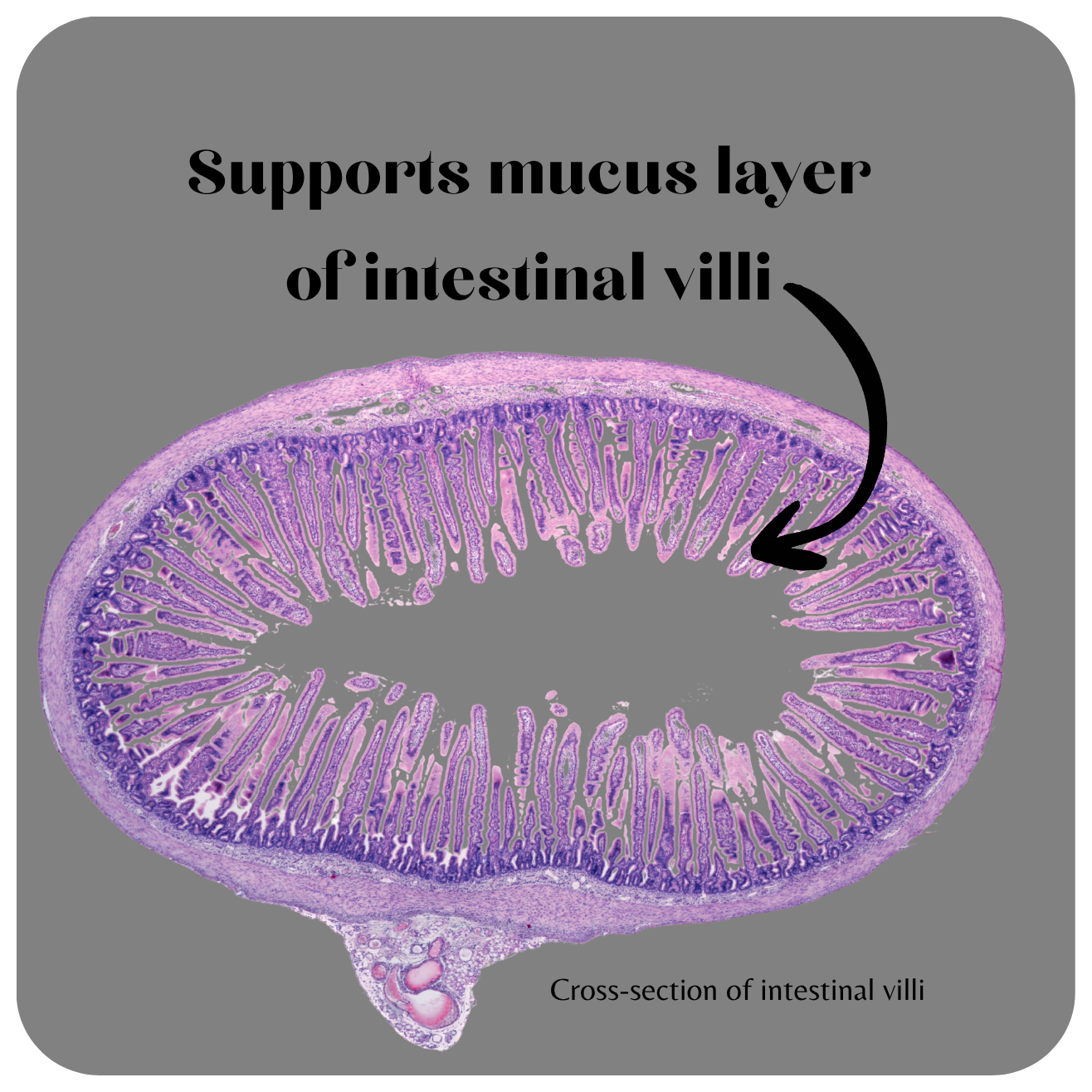
One detail worth getting right: Akkermansia’s favorite neighborhood is mainly the large intestine, not the small intestine. Research comparing the two shows the small intestine’s mucus layer is thinner and more loosely attached, while the colon’s mucus layer is thick, dense, and firmly anchored, exactly the kind of environment Akkermansia needs to thrive (Geerlings et al., 2018). Smaller amounts of Akkermansia do interact with the gut lining elsewhere along the digestive tract, not just the colon, it’s simply where it’s found in the highest concentration and does most of its specialized work (Mo et al., 2024).
How It Supports Gut Barrier Health
Unlike bacteria that just pass through, Akkermansia actually feeds on mucin, the substance that makes up that protective mucus layer. That sounds counterintuitive, a bacterium eating your gut lining’s protective coating, but the process works more like a site manager than a demolition crew: as Akkermansia consumes mucin, it produces short-chain fatty acids that signal your gut’s goblet cells to produce fresh mucin in return, keeping that barrier layer continuously renewed and reinforced rather than worn down (Mo et al., 2024; Geerlings et al., 2018).
Your gut lining does double duty: it has to let nutrients through while keeping bacteria, toxins, and undigested food particles out of your bloodstream. A healthier, well-maintained gut barrier is associated with lower systemic inflammation, since less material is able to cross into the bloodstream where it doesn’t belong.
Some of the specifics: as Akkermansia breaks mucin down, it releases organic acids like acetate and propionate, short-chain fatty acids that feed and strengthen the cells lining your gut. Separately, a protein it produces called Amuc-1100 has been shown to help tighten the connections between intestinal cells, known as tight junctions, making the gut lining itself less permeable, sometimes described as a “leaky gut” when this breaks down (Mo et al., 2024).
The GLP-1 Connection
GLP-1 (glucagon-like peptide-1) is a hormone your gut releases after eating. It signals satiety to your brain, slows down digestion, and helps regulate blood sugar, which is exactly why GLP-1 medications have become so widely discussed. What’s less widely known is that your gut bacteria influence how much GLP-1 you naturally produce.
A 2021 study identified a specific protein, named P9, that Akkermansia secretes. P9 binds directly to receptors on the intestinal cells responsible for releasing GLP-1, triggering that release, and in mouse models it also improved blood sugar regulation and metabolic markers on its own (Yoon et al., 2021). A 2025 study similarly found that Akkermansia extracts triggered a dose-dependent increase in GLP-1 release from intestinal L-cells in lab models, alongside a smaller increase in insulin secretion from pancreatic beta cells (Arukha et al., 2025).
Mechanistically, this happens through a few different paths: Akkermansia’s surface proteins and its short-chain fatty acid byproducts interact with several receptors on intestinal cells, triggering GLP-1 release both directly and indirectly. That matters beyond blood sugar and satiety too, GLP-1 itself has an anti-inflammatory effect in the gut (Mo et al., 2024).
Separately, a 2026 randomized controlled trial in Nature Medicine tested a pasteurized Akkermansia supplement in adults with overweight or obesity who had just completed a structured weight loss phase. Over 24 weeks, the group taking Akkermansia regained significantly less weight than the placebo group (Mount et al., 2026). That’s a meaningful, specific finding: support for weight maintenance after loss, not a claim that Akkermansia causes weight loss on its own, and it’s one trial, not a settled conclusion.
The Gut-Brain Connection
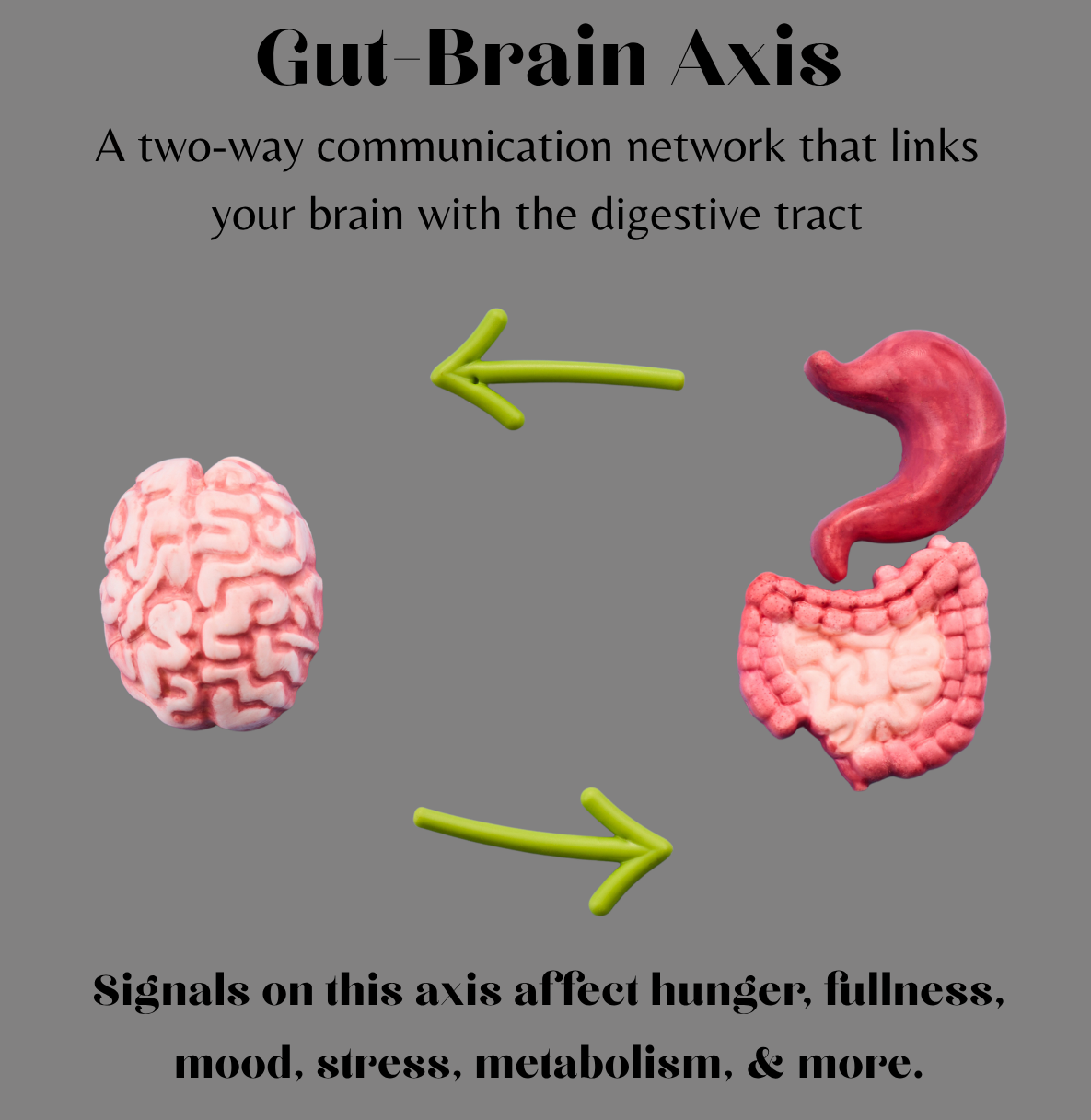
Your gut and brain are in constant communication, and the traffic runs mostly one direction. About 80 to 90% of the fibers in the vagus nerve, the main highway between gut and brain, carry signals upward from the gut to the brain, not the other way around (Bonaz et al., 2018). Those signals help regulate hunger, fullness, metabolism, and how your body responds to different foods.
Your gut is also where most of your body’s serotonin comes from. Roughly 90% of the body’s serotonin, a neurotransmitter tied to mood and well-being, is produced in the digestive tract, largely with help from resident gut bacteria (Yano et al., 2015). This is still an early, developing area of research specifically for Akkermansia: a 2026 animal study compared live Akkermansia to the antidepressant fluoxetine and found Akkermansia produced broader effects on stress hormone and serotonin regulation in mice (Ma et al., 2026). That’s a mouse study, not a human trial, worth knowing about but not a reason to treat Akkermansia as a treatment for depression.
Foods and Habits That Support Akkermansia
You don’t need a supplement to support Akkermansia levels. Diet and lifestyle both play a real role:
- Polyphenol-rich foods. Akkermansia responds well to polyphenols, plant compounds found in berries, pomegranate, grapes, green tea, and dark chocolate (85% cocoa or higher). A 2024 study found that grape polyphenol extract specifically supported Akkermansia growth by reducing oxidative stress in the gut, an effect that plain vitamin C and beta-carotene didn’t reproduce (Van Buiten et al., 2024). Because polyphenols aren’t fully absorbed in the small intestine, they stay active in the gut longer, giving bacteria like Akkermansia more contact time with them.
- Fiber, especially from varied plant sources. Beans, oats, flaxseed, asparagus, and onions all feed a diverse gut microbiome, Akkermansia included.
- Fermented foods support overall microbiome diversity, which creates a better environment for Akkermansia to thrive alongside other beneficial bacteria.
- Time-restricted eating. A 2022 systematic review found intermittent fasting, including alternate-day fasting and time-restricted eating windows, was associated with favorable shifts in gut microbiota, including Akkermansia (Pinto et al., 2022). This is a newer area of research than the diet studies above, so consider it a promising direction rather than a settled recommendation.
Where This Fits in the Bigger Picture
Akkermansia is one piece of a much larger gut ecosystem, not a magic fix on its own. The research connecting it to GLP-1, weight maintenance, gut barrier health, and even mood is genuinely promising, and it’s also still developing. Diet and lifestyle changes are the foundation, and they’re accessible to everyone starting today. If you want to go further, targeted probiotic support is one option some people explore alongside those basics. I wrote about the specific approach I personally use and recommend, including the exact products, in a separate piece: Why I Recommend the Akkermansia Protocol.
Key Takeaways
- Akkermansia muciniphila is a naturally occurring gut bacterium that lives mainly in the colon’s mucus layer, linked to gut barrier health and metabolic function.
- It renews rather than depletes your gut lining: as it feeds on mucin, it triggers your gut to produce fresh mucin in return.
- Research connects it to GLP-1 production, the same hormone pathway behind popular GLP-1 medications, through a specific secreted protein (P9) and short-chain fatty acids.
- A 2026 randomized controlled trial found it supported weight maintenance after a structured weight loss phase, not weight loss on its own.
- The gut-brain connection is real and significant (most vagus nerve traffic runs gut to brain, and most serotonin is made in the gut), though Akkermansia’s specific role in mood is still early-stage, animal-only research.
- Polyphenol-rich foods, varied fiber, fermented foods, and possibly time-restricted eating all support healthy Akkermansia levels.
- It’s one part of overall gut health, not a standalone solution.
The gut microbiome research world moves fast, and Akkermansia is one of the more genuinely interesting names in it right now. The practical takeaway is simple, though: eat a varied, plant-forward diet, include polyphenol-rich foods regularly, and keep moving. Your gut bacteria, Akkermansia included, will thank you for it.
References
Arukha, A. P., Nayak, S., & Swain, D. M. (2025). Effect of Akkermansia muciniphila on GLP-1 and insulin secretion. Nutrients, 17(15), 2516. https://doi.org/10.3390/nu17152516
Bonaz, B., Bazin, T., & Pellissier, S. (2018). The vagus nerve at the interface of the microbiota-gut-brain axis. Frontiers in Neuroscience, 12, 49. https://doi.org/10.3389/fnins.2018.00049
Geerlings, S. Y., Kostopoulos, I., de Vos, W. M., & Belzer, C. (2018). Akkermansia muciniphila in the human gastrointestinal tract: When, where, and how? Microorganisms, 6(3), 75. https://doi.org/10.3390/microorganisms6030075
Ma, W. J., Hung, P. J., Chang, F. C., et al. (2026). Akkermansia muciniphila vs. fluoxetine: Amelioration of depression-like behaviors and cognitive dysfunction through distinct neurobiological mechanisms. Probiotics and Antimicrobial Proteins, 18, 5793 to 5817. https://doi.org/10.1007/s12602-025-10850-6
Mo, C., Lou, X., Xue, J., Shi, Z., Zhao, Y., Wang, F., & Chen, G. (2024). The influence of Akkermansia muciniphila on intestinal barrier function. Gut Pathogens, 16, 41. https://doi.org/10.1186/s13099-024-00635-7
Mount, S., et al. (2026). Pasteurized Akkermansia muciniphila MucT for weight loss maintenance in people with overweight and obesity: A controlled randomized trial. Nature Medicine, 32, 2107 to 2116. https://doi.org/10.1038/s41591-026-04394-7
Pinto, F. C. S., Silva, A. A. M., & Souza, S. L. (2022). Repercussions of intermittent fasting on the intestinal microbiota community and body composition: A systematic review. Nutrition Reviews, 80(3), 613 to 628. https://doi.org/10.1093/nutrit/nuab108
Van Buiten, C. B., Seitz, V. A., Metcalf, J. L., & Raskin, I. (2024). Dietary polyphenols support Akkermansia muciniphila growth via mediation of the gastrointestinal redox environment. Antioxidants, 13(3), 304. https://doi.org/10.3390/antiox13030304
Yano, J. M., et al. (2015). Indigenous bacteria from the gut microbiota regulate host serotonin biosynthesis. Cell, 161(2), 264 to 276. https://doi.org/10.1016/j.cell.2015.02.047
Yoon, H. S., Cho, C. H., Yun, M. S., et al. (2021). Akkermansia muciniphila secretes a glucagon-like peptide-1-inducing protein that improves glucose homeostasis and ameliorates metabolic disease in mice. Nature Microbiology, 6, 563 to 573. https://doi.org/10.1038/s41564-021-00880-5
This article is for educational purposes and isn’t medical advice. Talk with your doctor before making changes based on anything here, especially if you’re managing a health condition or taking medication.
Leave a Reply