“Pickled” and “fermented” get used interchangeably at the grocery store, but they describe two genuinely different processes, and only one of them puts live, beneficial bacteria in the jar. If you’re reaching for pickles because you’ve heard they’re good for gut health, it matters which kind you’re actually buying.
Two Different Processes, Not Two Names for the Same Thing
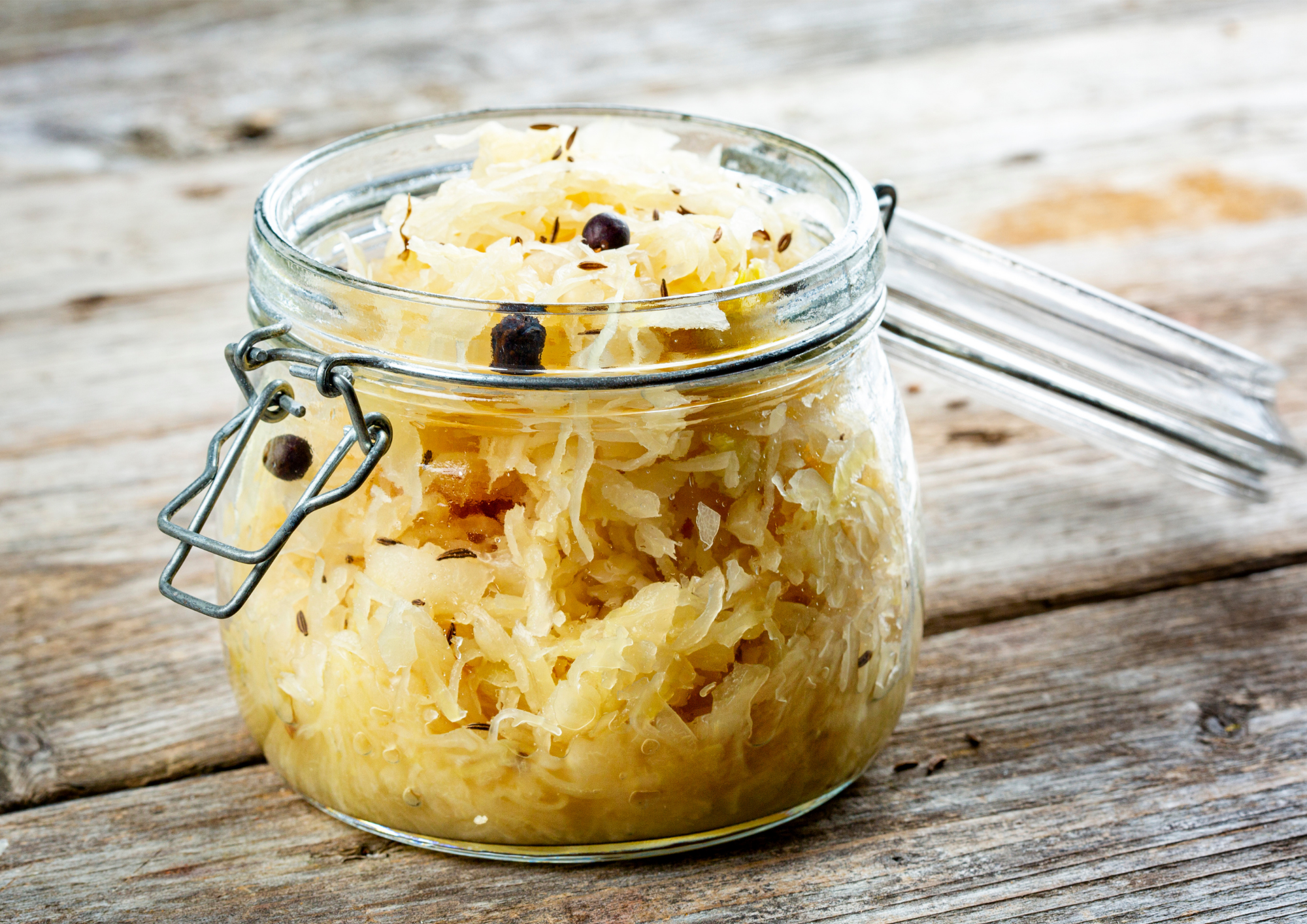
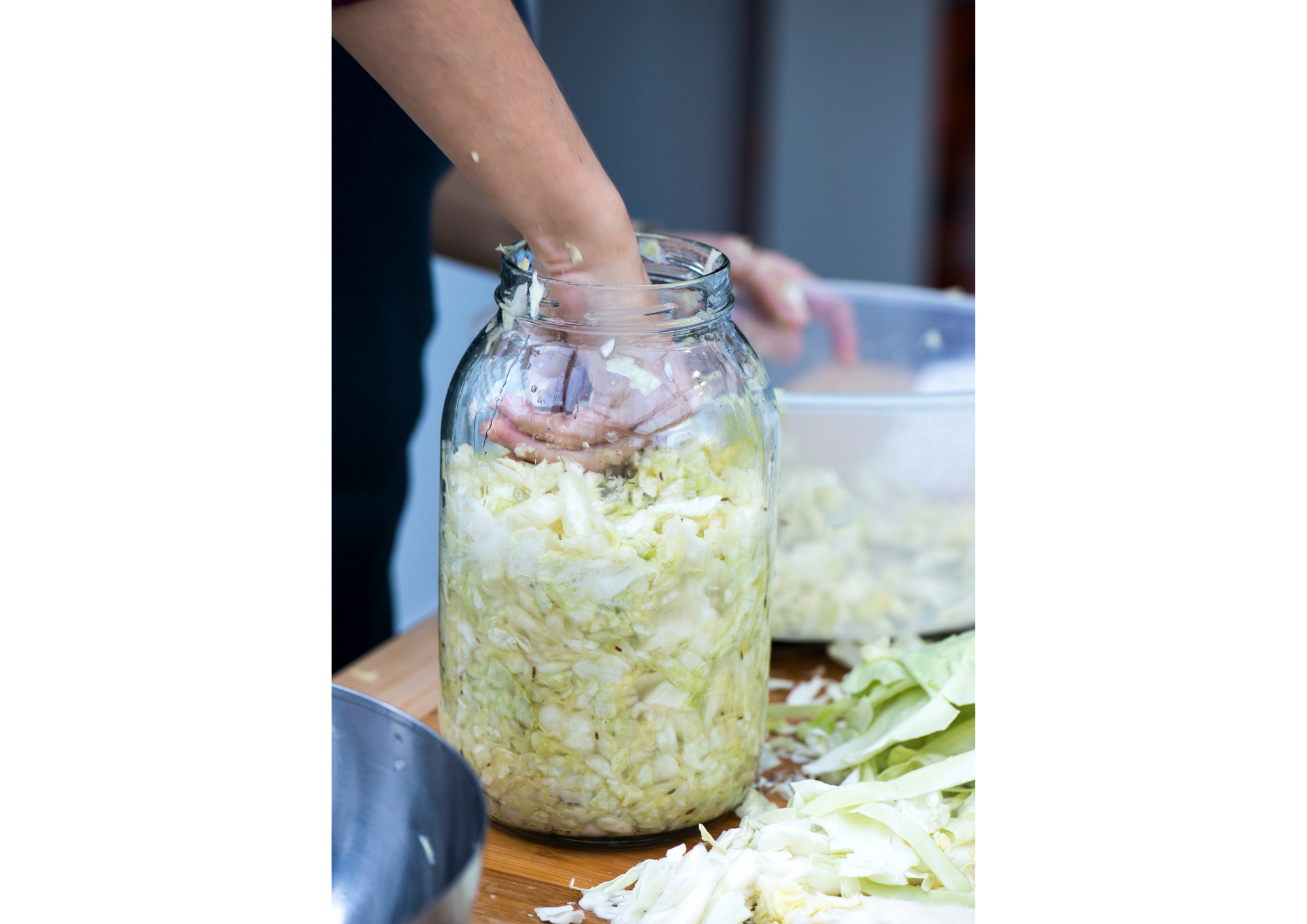
Fermented pickles (true lacto-fermentation): vegetables submerged in a saltwater brine (typically 3 to 5% salt). Naturally occurring lactic acid bacteria, mainly Lactobacillus and Leuconostoc species, feed on the vegetable’s natural sugars and convert them into lactic acid. This takes real time, anywhere from about a week (refrigerator dills) to several weeks (traditional dill pickles, sauerkraut). No vinegar involved, the sourness is produced by the bacteria themselves.
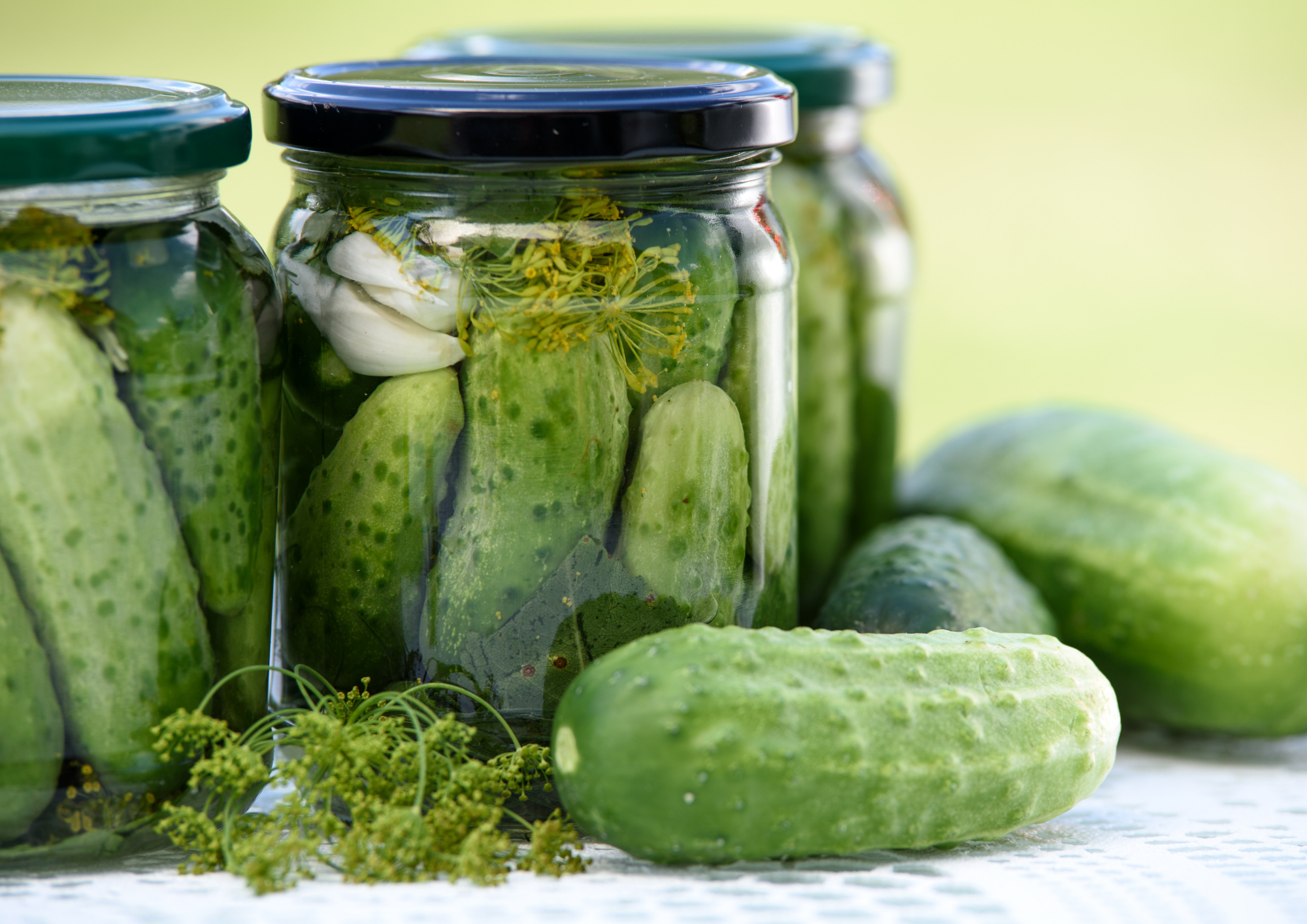
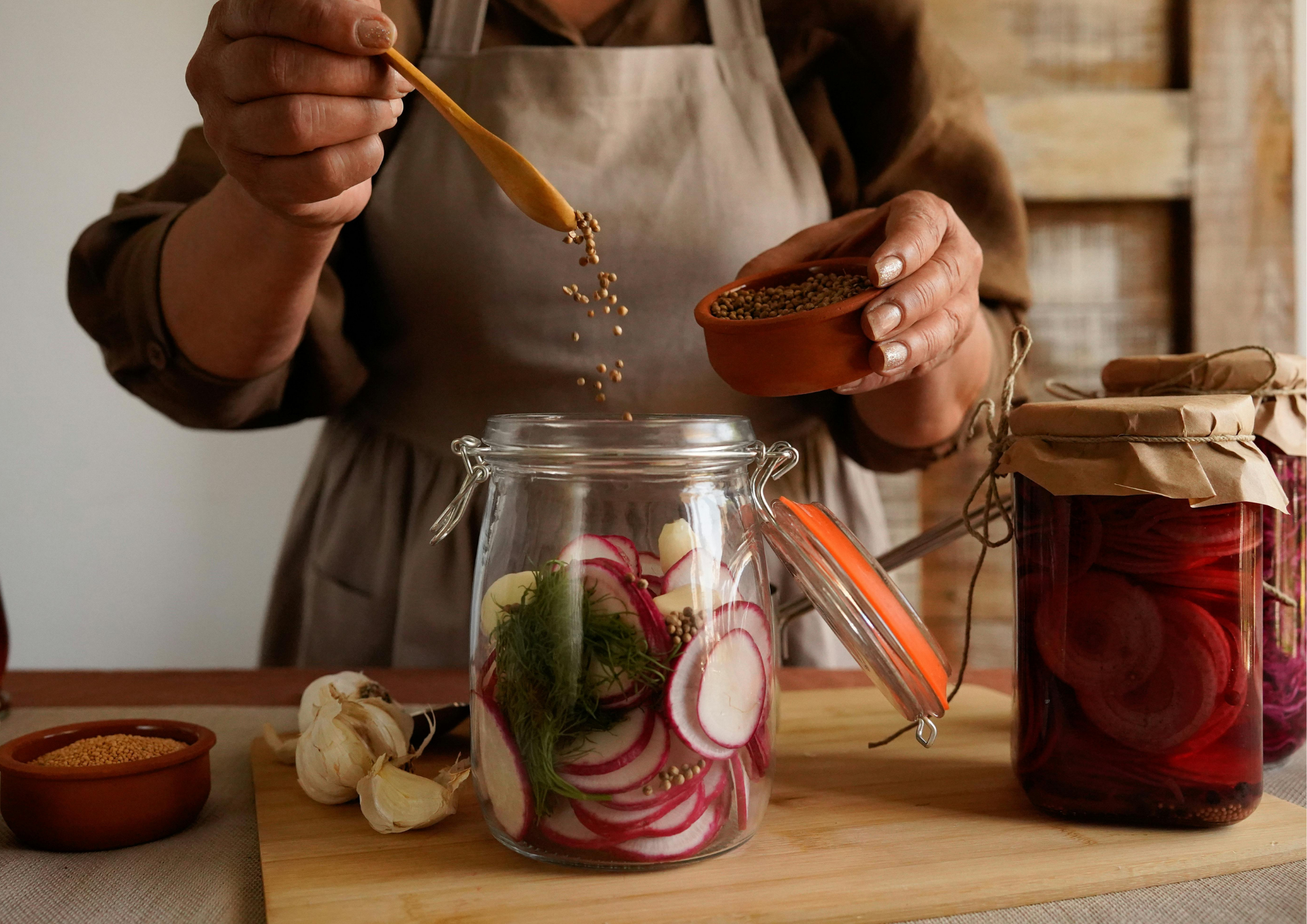
Vinegar-pickled (quick or “fresh-pack” pickles): vegetables are briefly brined, then covered in a vinegar-based liquid (often with sugar, salt, spices) and typically heat-processed. The acetic acid in vinegar drops the pH immediately, which is what preserves the food, and that same acidity is too harsh an environment for fermentation bacteria to survive or grow. This happens in hours to a couple of days, not weeks.
Why Only One of Them Has the Bacteria
This is the actual health-relevant distinction: fermented pickles carry live, beneficial bacteria (assuming they haven’t been pasteurized afterward), while vinegar-pickled ones essentially never do, the vinegar’s acidity blocks fermentation bacteria from ever establishing themselves in the first place. Heat processing, used for shelf-stable vinegar pickles, then goes a step further and kills off any remaining microbes for food-safety and shelf-life reasons.
There’s real research behind why this matters: a 2021 Stanford study had one group of adults eat a high-fermented-food diet for 10 weeks and found their gut microbiome diversity increased and 19 inflammatory markers in their blood decreased, an effect not seen in a comparison group that instead increased fiber intake (Wastyk et al., 2021, Cell). That’s a meaningful finding specifically tied to foods carrying live cultures, not to pickled foods in general.
How to Actually Tell the Difference at the Store
Since both types get called “pickles” on the label, here’s what actually tells you which one you’re holding:
- Where it’s shelved. True fermented pickles need refrigeration to keep their live cultures stable, so they live in the refrigerated section, not the shelf-stable pickle aisle. A jar sitting at room temperature on a regular shelf has almost certainly been pasteurized, made with vinegar, or both.
- The ingredient list. Fermented pickles typically list just vegetables, water, salt, and spices, no vinegar. If vinegar or acetic acid appears in the ingredients, it’s a vinegar pickle, whatever the front label calls it.
- Label language. Look for “naturally fermented,” “lacto-fermented,” “raw,” “unpasteurized,” or “contains live cultures.” None of those claims mean much on a vinegar-based product, so their presence is a genuine signal.
- The brine itself. Fermented brine is often slightly cloudy, a normal byproduct of bacterial activity, sometimes with small bubbles. Vinegar brine tends to be clear.
- Taste. Fermented pickles have a more complex, rounded tang from lactic acid. Vinegar pickles taste sharper and more one-note, since it’s just acetic acid doing the work.
A Couple of Honest Caveats
Fermented doesn’t automatically mean “better” across the board. Both styles tend to be high in sodium, since salt is essential to both methods (fermentation as the process itself, vinegar pickling often alongside it for flavor), so sodium content is worth watching regardless of which kind you choose. And live, unpasteurized fermented foods aren’t the right call for everyone: people who are immunocompromised or pregnant are often advised to check with their provider before regularly eating raw, unpasteurized fermented products.
The Bottom Line
If the goal is genuinely supporting your gut microbiome, reach for something labeled naturally fermented or raw, sitting in the refrigerated section, with an ingredient list that skips the vinegar. If it’s shelf-stable and vinegar is on the label, it can still be a perfectly good vegetable snack, it’s just not doing the probiotic job pickles get credit for.
Want to go a layer deeper? See the free Strain Diversity guide for why the specific fermented food you pick, not just “fermented vs. not,” also matters.
References
- National Center for Home Food Preservation, University of Georgia. “General Information on Fermenting.” nchfp.uga.edu
- University of Minnesota Extension. “How to Make Fermented Pickles.” extension.umn.edu
- Wastyk, H. C., Fragiadakis, G. K., Perelman, D., et al. (2021). Gut-microbiota-targeted diets modulate human immune status. Cell, 184(16), 4137-4153.e14. https://doi.org/10.1016/j.cell.2021.06.019
- Harvard Health Publishing. “Fermented Foods for Better Gut Health.” health.harvard.edu
Leave a Reply