Ever notice how a plate full of different-colored vegetables just looks more appealing than one that’s all one shade of green or beige? Turns out that instinct is onto something. Starting with this post, I’m kicking off a mini-series inside Nourishing Naturally exploring the “why” behind each of the six vegetable color categories: what gives them their color, what that color tends to come with nutritionally, and a recipe to actually put it on your plate. First up: red.
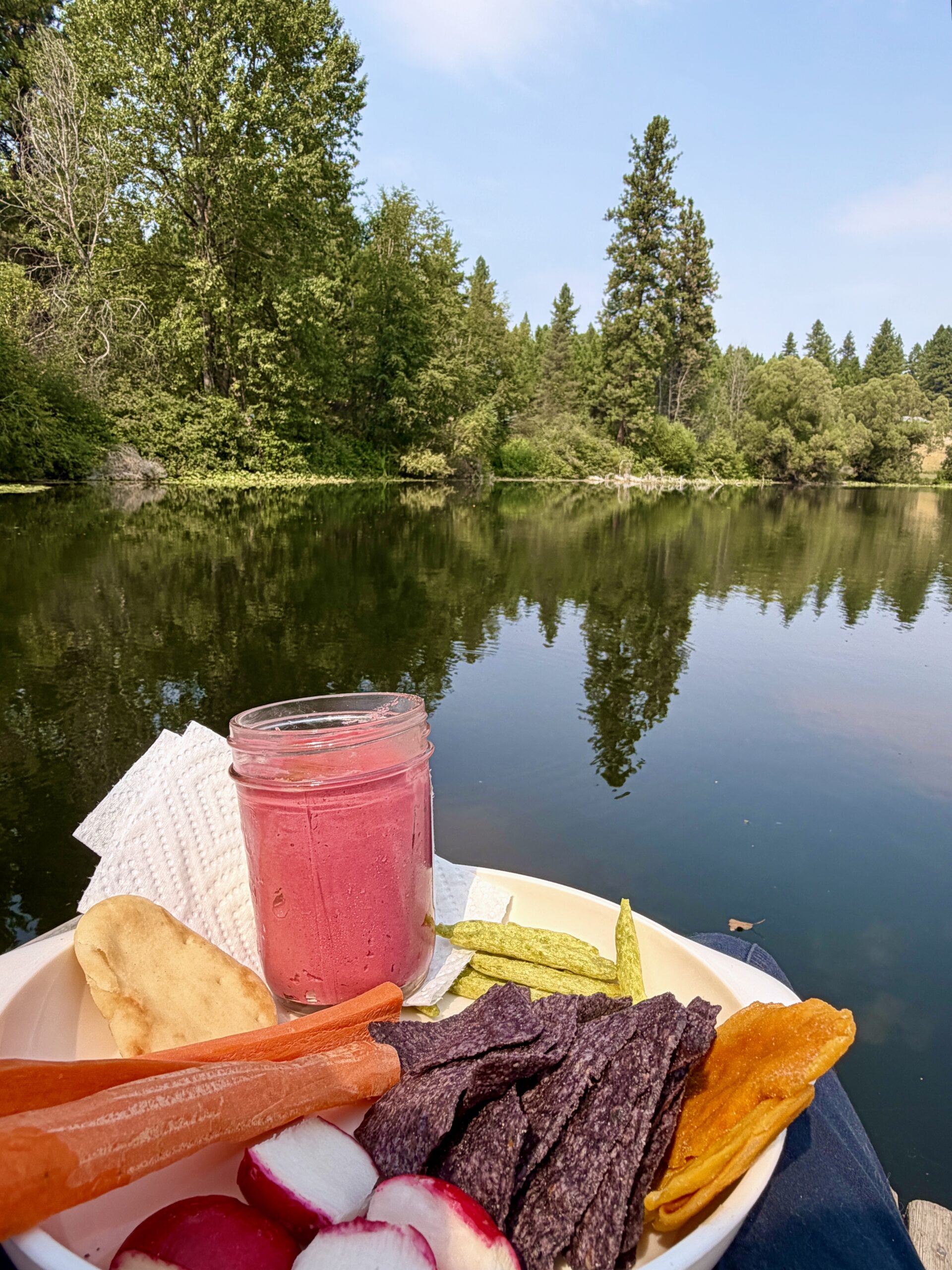
Eating by Color: Why Red Vegetables Matter
Red vegetables get their color mainly from two plant pigments, lycopene and anthocyanins, that double as antioxidants. Lycopene is linked to heart health and helps protect cells from everyday oxidative stress, while anthocyanins contribute anti-inflammatory activity (Minich, 2019). Red vegetables also tend to be a solid source of vitamin C, which supports immune function and collagen production, and potassium, which helps regulate blood pressure and muscle function.
Red vegetables to look for: tomatoes, red bell peppers, beets, red cabbage, radishes, and red onions.
Why Beets?
Beets are a cool-season root vegetable, one of the more forgiving things to grow, tolerant of light frost and happy in a spring or fall planting. Almost nothing about the plant goes to waste: the greens on top are edible too (worth sautéing like chard), so one plant gives you two vegetables. Beets also keep well in cool, dark storage for months without any processing, which is part of why they’ve historically been a reliable staple through winter.
Roasted Beet Hummus
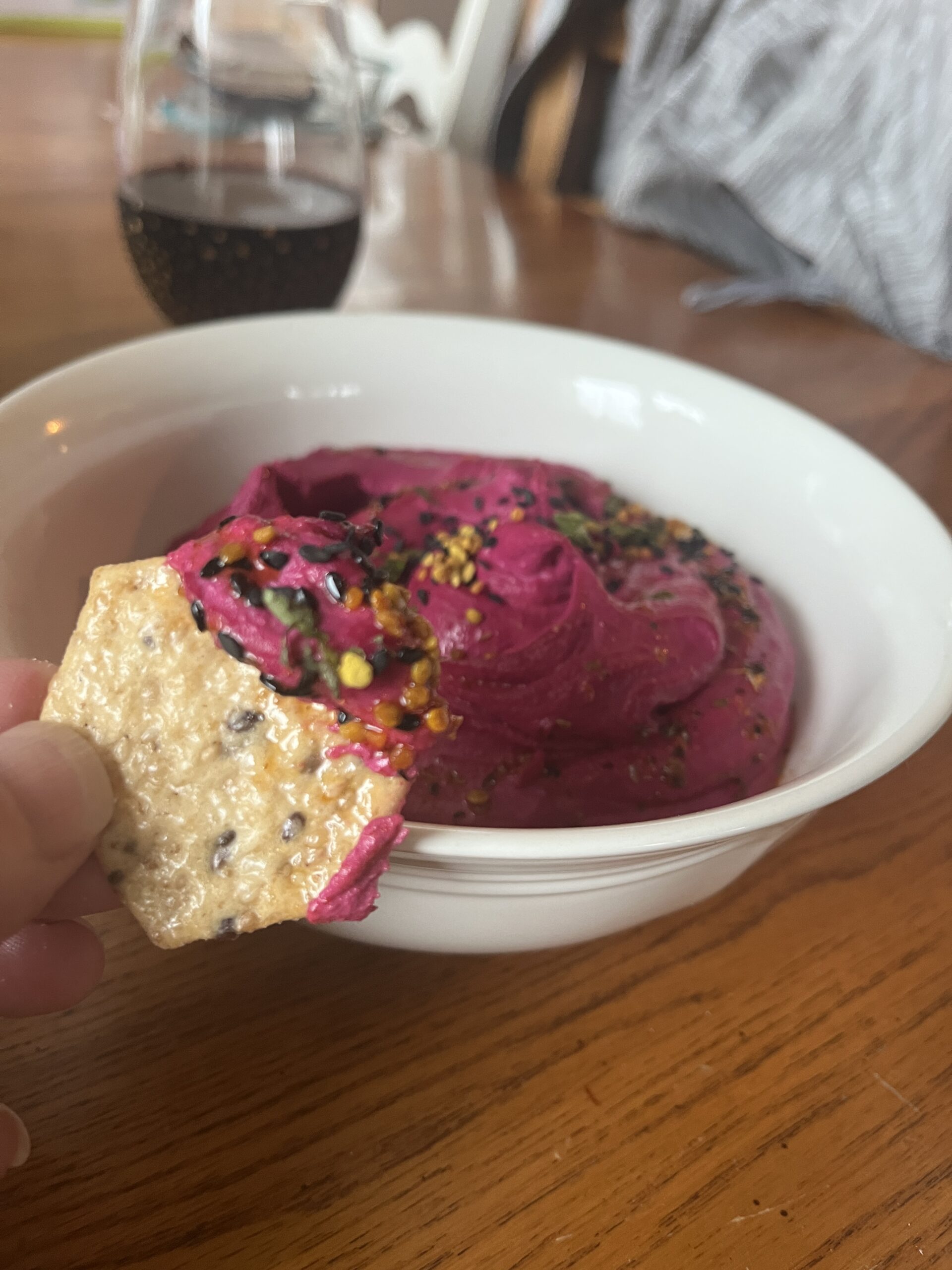
A vibrant magenta dip that doesn’t taste like the canned beets you remember, roasted beets blended smooth with chickpeas, tahini, garlic, and lemon. Get the full recipe with ingredients, directions, and nutrition facts below.
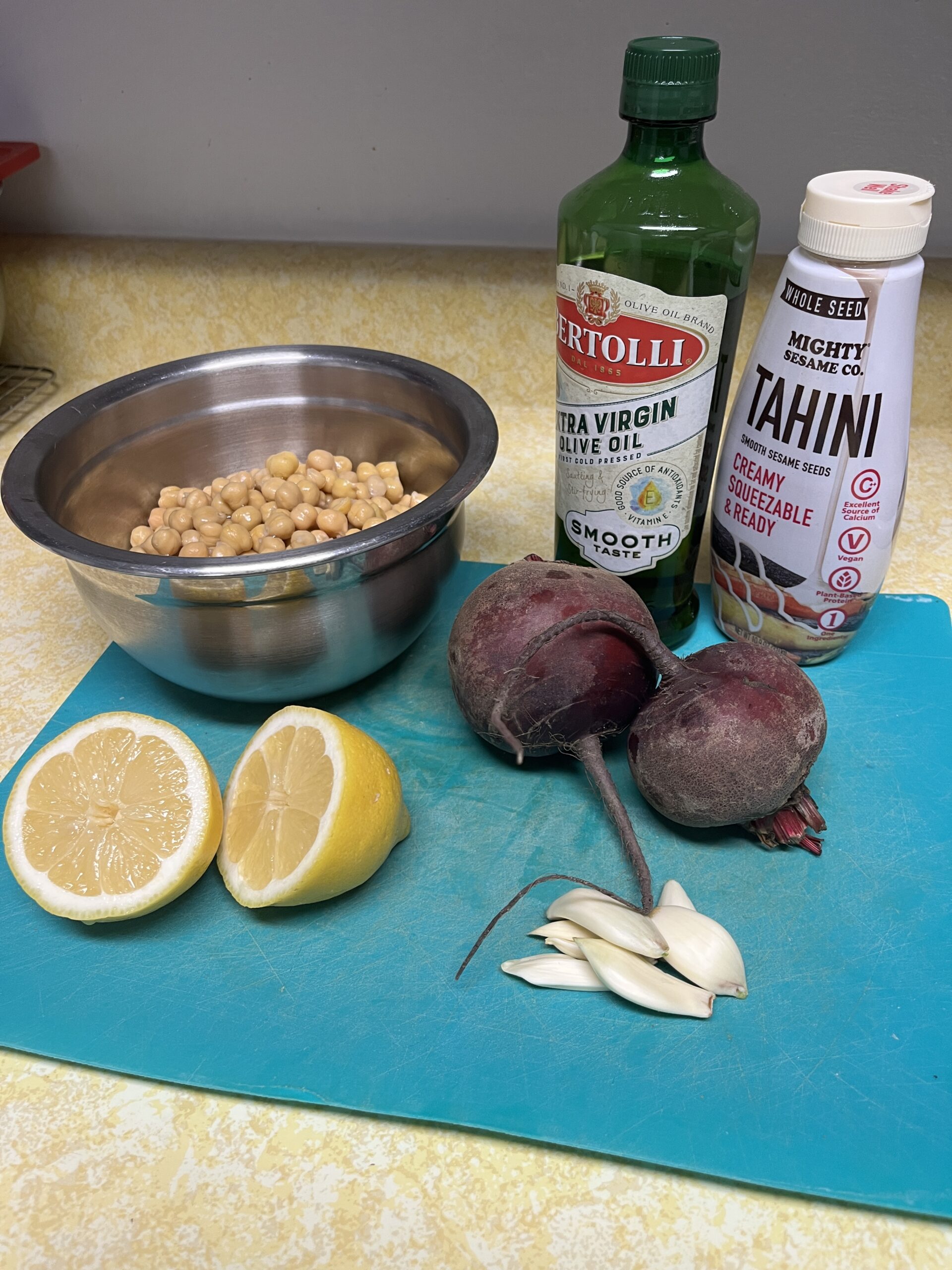
Roasted Beet Hummus
Ingredients
Method
- Peel 3 medium beets and cut into quarters. Place in a covered roasting dish and roast at 400°F for 40 minutes.
- Strain 2 cans of chickpeas. For best results, simmer them in a pot of water for 10 minutes, then strain again and remove the skins from each chickpea.
- Stir the tahini well, then add 10 oz to a blender along with the chickpeas, garlic, and roasted beets.
- Slowly add the lemon juice and olive oil, then the spices, blending until well combined.
- Add the ice cubes last and blend until smooth.
- Transfer to a serving dish, or store in a tightly sealed container for up to 3 weeks.
- Optionally top with seasoned olive oil, sesame seeds, bee pollen, or green onions. Serve with focaccia or sourdough crackers.
Nutrition
Notes
Tried this recipe?
Let us know how it was!Beets get their deep color from betalains, a different pigment family from the anthocyanins in things like red cabbage, and one that’s been studied for its own antioxidant and anti-inflammatory activity (Esatbeyoglu et al., 2015). Beets are also naturally high in dietary nitrates, which the body converts into nitric oxide, a molecule that helps blood vessels relax and widen. That’s the mechanism behind most of the research on beets and blood pressure, and on beet juice and exercise performance (Jones, 2014). Beyond that, beets bring a meaningful amount of folate, manganese, fiber, and potassium to the table.
Beets are the headline here, but the rest of the ingredients are doing real work too. Chickpeas bring plant protein and fiber to the mix, tahini (ground sesame) adds more plant protein plus calcium, zinc, and healthy unsaturated fats, olive oil contributes more of those heart-healthy monounsaturated fats, and lemon juice adds a real dose of vitamin C on top of brightening the flavor. Put together, this isn’t just a beet dish, it’s a genuinely well-rounded one: fiber, plant protein, and healthy fats in the same bowl.
One thing worth knowing before you dig into this recipe: it’s completely normal for beets to turn urine or stool pink or reddish after eating them. It’s called beeturia, it isn’t dangerous, and it just comes down to how some people’s bodies process the same betalain pigments that give beets their color. If it happens to you, that’s not a sign anything’s wrong, just a sign you ate beets.
Quick Review
One serving of this recipe provides:
- 16% of daily need for vitamin E
- 17% of daily need for B6 (pyridoxine)
- 18% of daily need for iron
- 19% of daily need for zinc
- 20% of daily need for phosphorus
- 21% of daily need for folate
- 23% of daily need for B1 (thiamine)
- 25% of daily need for selenium
- 26% of daily need for dietary fiber
- 27% of daily need for magnesium
- 46% of daily need for manganese
- 69% of daily need for copper
(Cronometer Software Inc., n.d.)
Beets have a reputation for being polarizing, but roasted and blended into something creamy, they’re a completely different experience than the canned version most of us grew up with. A good place to start if you’ve been on the fence.
Next up in the series…
Orange
What’s your favorite orange vegetable?
References available on request. Cites Minich (2019), Esatbeyoglu et al. (2015), and Jones (2014).
Leave a Reply